The basics of Navigation and Map Reading
Wow, this is my very first post and I would like to elaborate on the basics of navigation for the young ones. This guide is for teens who love to go to many places in their neighbourhood. Starting with for any place you explore, there are three phases:
Phase 1: Before you leave
The aforementioned is the first and the most important phase. Here you plan
- Where do you go
- What do you carry
- A Contingency Scheme
I'd believe readers know where they go. But before choosing a spot it is important of having a genuine reason to go; Like 'for a sunrise photo', 'study the fauna' so forth..
Next what to carry also builds an important part. I'll cover the essentials. Your first priority must be water, knowledge of the local language, a smartphone (covered in contingency scheme) and some hard cash. The rest depends on the reason of your travel.
And last and important one is contingency scheme. As for me, I primarily use a map and a compass for navigation, But I also carry my smartphone and use the gps feature in case of any emergency need. Also, if you feel that you are lost, you can contact someone.
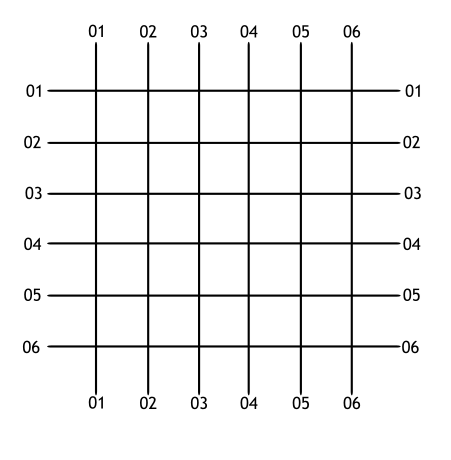
Now to mention about the map (you can decide weather to carry a map or use your smartphone, yet using a physical map can make your journey more interesting): It is not necessary to carry a topographic map unless there is a need for it, A tourist map would do good but it is very good to take a physical printout of your route (either from Google Maps or Bing Maps) as these are flexible and helps you to focus only on your current route. I would recommend a A4 or A3 sheet for the map as it would suffice for very short distant travels. After printing the map, the first thing to do is to mark the map north. Then one must add grid to the map; To do that is relatively simple: Just take a ruler and draw two sets of perpendicular lines with two centimetre gap from each other on the map. The vertical lines are called eastings and the horizontal lines are called northings. Next number the eastings first from 01~where it ends (move from left to right). Then number the northings again from 01~where it ends(move from down to top), It's good if you number on both ends of the line. Make sure that your grid complies with that one below.
Phase 2: While you are travelling
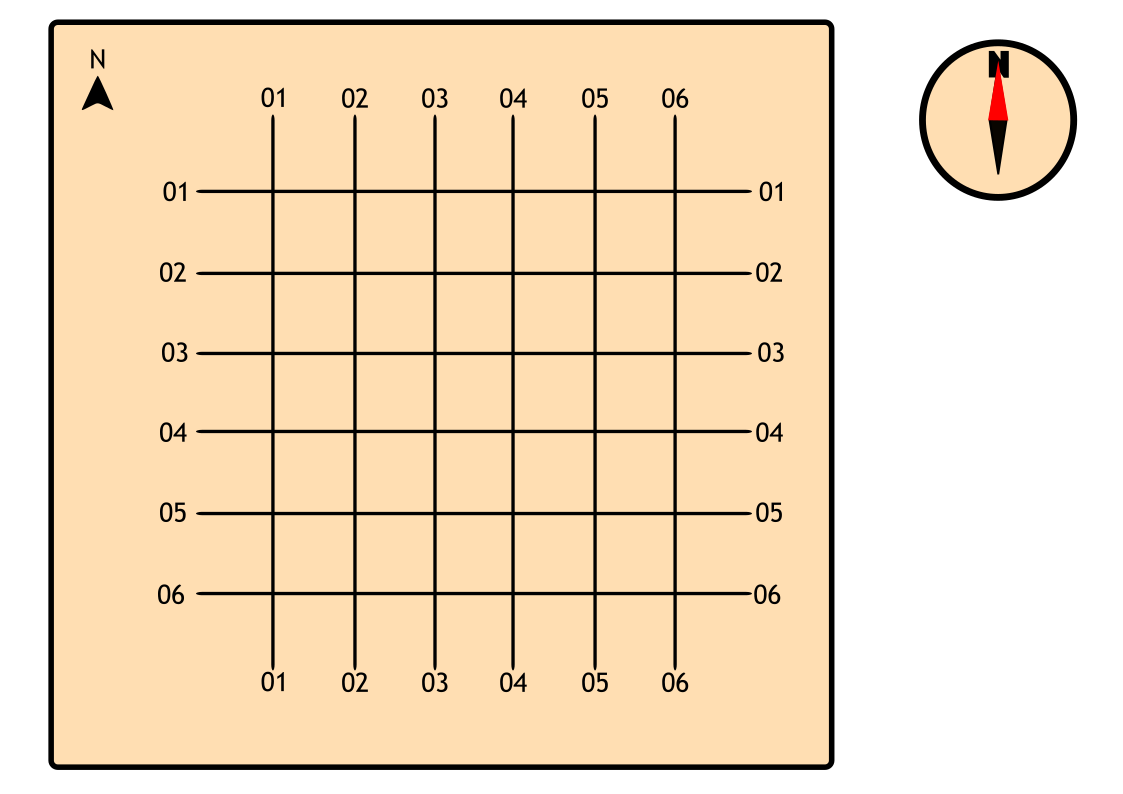
Here, I'll focus on what I generally do while travelling. At every circle or corner I take out my map and find the correct road. By regularly looking at the map you can easily have an idea about your current location and keep them updating every time you see. Generally before looking at the map aligning it is important. Here you basically align the map north with the true north (Take your compass and rotate it till the red needle points to the direction of the main arrow or the sighting wire as shown below, then move the map also in such a manner the map north is parallel to the main arrow or sighting wire).
And also the magnetic north (Compass North) will not be same as the true north (North of the Earth), it will vary by some degrees called declination degrees. Google it and you will find the degrees of your location. Add or subtract it with the degree reading on your compass to get the right degree for true north (This is just for your information coz you might not always use degrees for your navigation).
There are much more things you can do with a map and compass but we won't be using them now, and if you find some beautiful landscaps, click them.
Phase 3: When you reach your destination
Bravo! You've made it. But before you carry on the purpose for what you came here for, sit and relax for a while. Enjoy the atmosphere of the place. By doing so you'll feel fresh. Then you can carry out the purpose you came here for. Most likely I come to take photographs. And while you are at the spot, don't ever think about your journey back, you'll lose your mood, it is a good habit if you make a record of your journey.
But anyways have a great time and enjoy. All that matters is the memories you gain from exploring different places.