EXOPLANETS
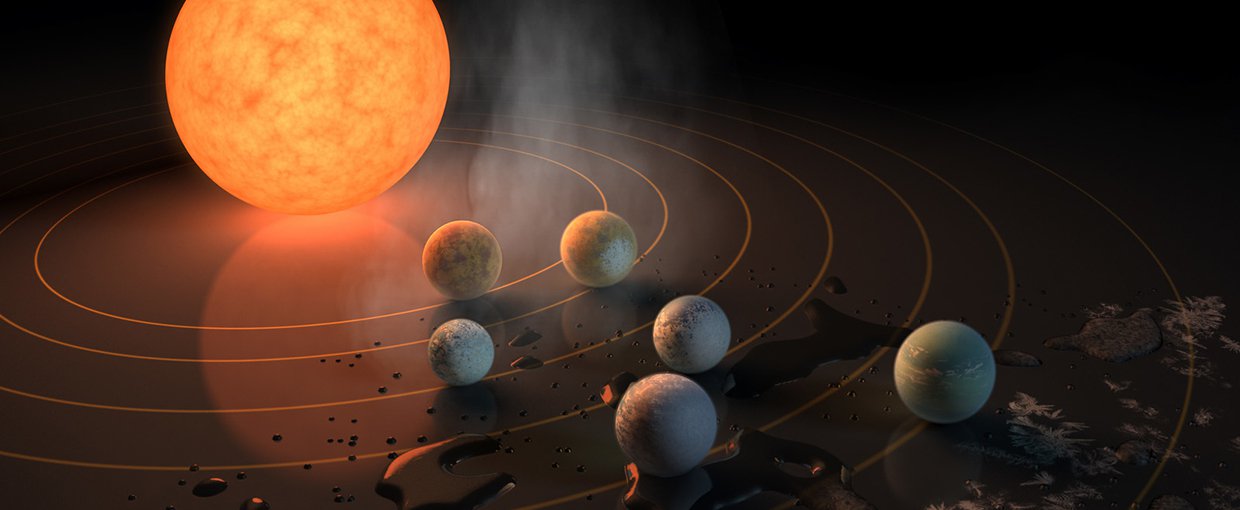
You all may have heard of the Trappist-1 system. If not, its a planetary system located an approximately 39 light years (12 parsecs) away from home. The sun here is Trappist-1A, a comparatively small star located in the constellation of Aquarius, and seven planets orbiting it as of now.
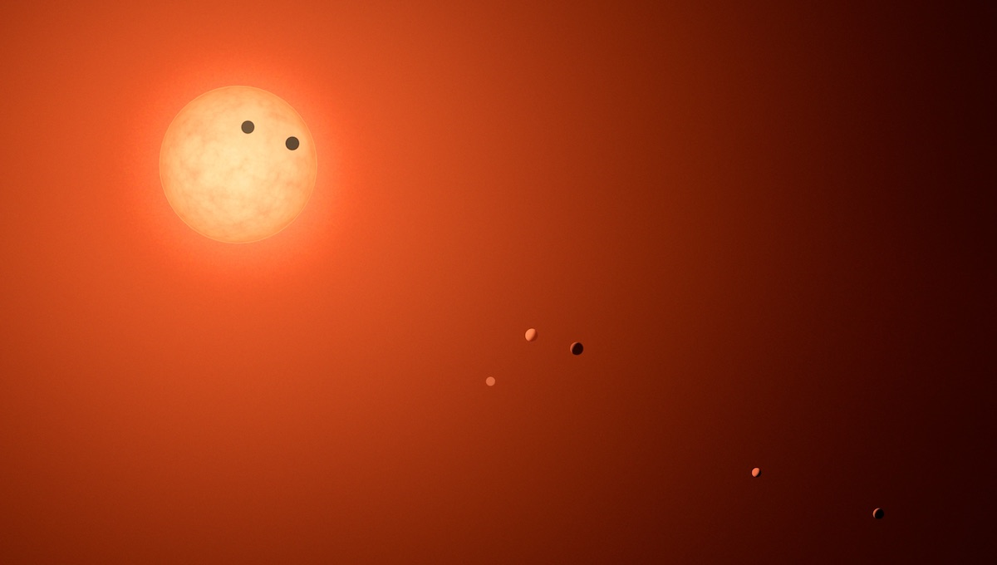
The question now here is how were we able to find out that the stars which are light years away from Earth also have planets. There are four different methods used to discover exoplanets. Transit method, radial velocity, microlensing and direct imaging. But we'll be focusing on the most popular transit method.
Average distance between stars
Just to give a rough idea of distance between the stars, let us look at a following example. Our star the Sun whose most nearest neighbor is Proxima Centauri (Alpha Centauri C) is located at a distance of 4.24 light years away or 40,208,000,000,000 km. The fastest space craft as of now, the Parker Solar Probe which traveled at a top speed of 246960.274 kilometers per hour, it would roughly take 19,000 years to reach there. How could we see something such as a planet which does not even emit its own light at such staggering distances?
A note on transits
Transits are actually seen when a planet orbit in such a manner that it casts its shadow over the star in the direction of the Earth. When we notice a dip in the luminosity of the star, it shows that a planet is in orbit. Based on time period of the dip, it is possible to find out its distance from its star eventually knowing weather is it in the Goldilocks zone .Transits are very useful in order to study various things such as
- Conforming the existence of a planet
- If yes, how huge is it (Based on the amplitude of the dip)
- The chemical composition of its atmosphere
- And of course, its biological footprint
In order to do all this on an Earth sized planet orbiting a star like sun, it may take several years. Thus choosing smaller dwarf stars means more likeliness to find planets orbiting it and also each orbit may just weeks.
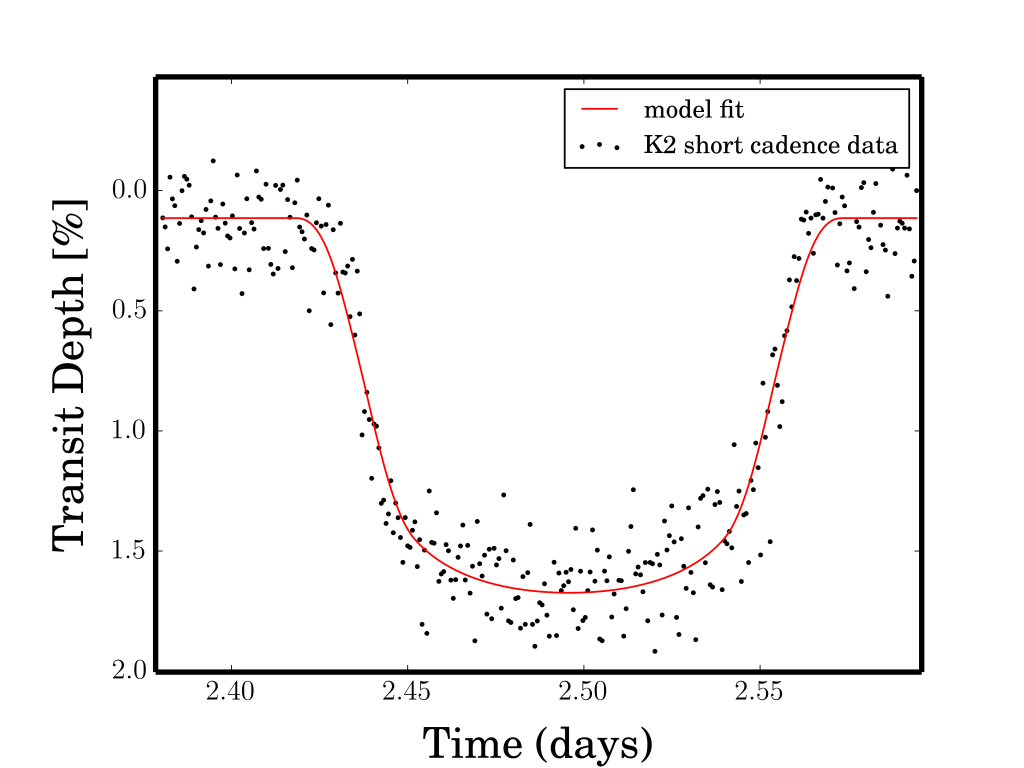
It is also to be noted that during a transit the light from the star passes through the atmosphere of the plant, light is transformed corresponding to the chemical composition of the atmosphere. Using the data gathered it is possible to find the gases in its atmosphere. If oxygen is present, there may be chances of life blooming on that planet.
Benefits
It may be one of our first steps in discovering exoplanets, but finding a planet with life can be an answer to questions asked for ages. And in the far future, human colonies may appear on such planets.